
Comprehensive Eye Checkup & Vision Assessment
Complete 7-point ophthalmic examination including dilated fundus, computerised refraction, slit-lamp biomicroscopy & eye pressure test.
Duration
30 - 45 Minutes
Anesthesia
Gentle Diagnostic Drops (If Tonometry/Dilation Needed)
Hospital Stay
Outpatient OPD Consultation
Recovery
Immediate (Pupils normalize in 2-3 hours)
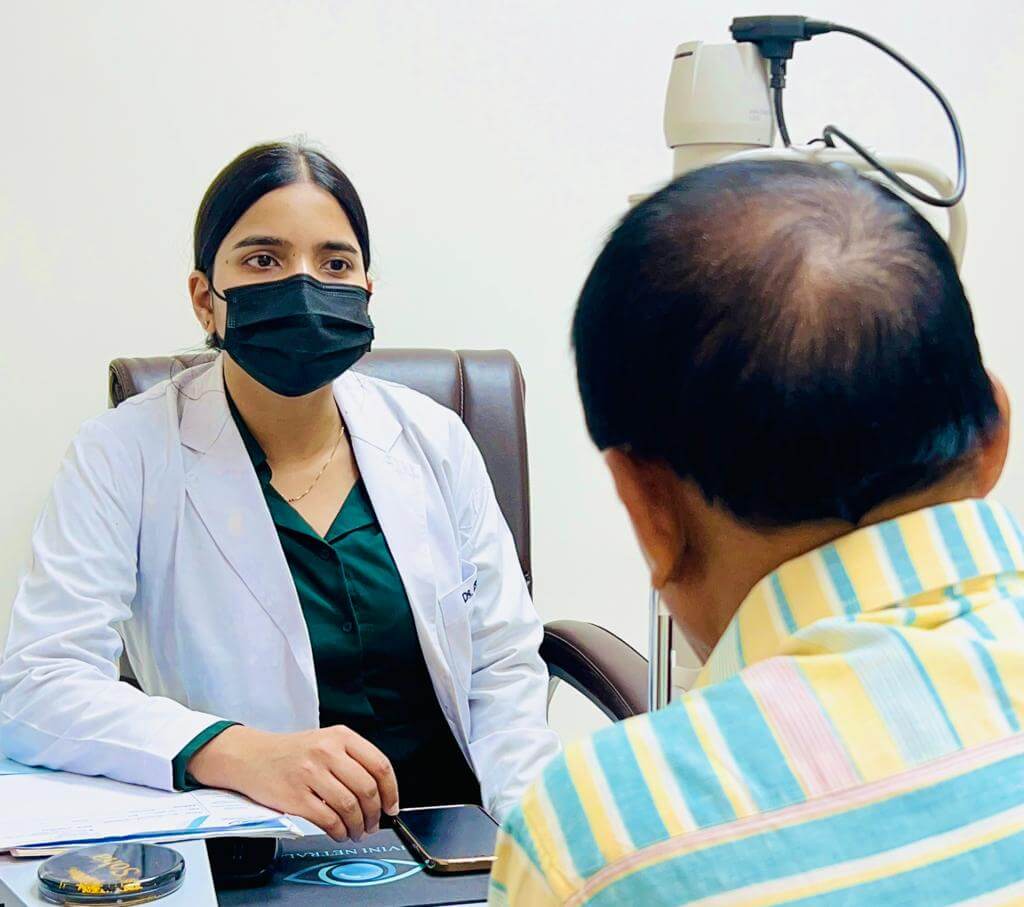
Clinical Overview & Treatment Method
A comprehensive eye examination at Ashvini Netralaya is an essential preventive health check that protects your lifelong sight. Many blinding conditions—including open-angle glaucoma, diabetic retinopathy, hypertensive eye changes, and retinal degenerations—progress silently without pain or noticeable vision loss in their early stages. By the time noticeable symptoms occur, irreversible nerve damage may have already taken place.
Our senior ophthalmic specialists conduct a systematic 7-point diagnostic evaluation utilizing high-precision computerized equipment. We thoroughly inspect your refractive error, corneal surface, crystalline lens clarity, intraocular pressure, anterior chamber angle, and dilated retina/optic nerve head to detect systemic and ocular issues years before they affect your daily life.
Key Clinical Advantages at Ashvini Netralaya
Symptoms & When to Consult an Eye Specialist
If you or your family members in Agartala or Tripura experience any of the following indications, we strongly advise scheduling an evaluation:
Who is an Ideal Candidate for this Procedure?
Eye Examination Packages at Ashvini Netralaya
Select the checkup level matching your health profile, age group, and medical history.
| Option / Type | Vision Range | Night Glare | Spectacle Freedom | Ideal Candidate |
|---|---|---|---|---|
Standard Refraction Check Basic | Vision acuity & glass prescription | Not assessed | Generates spectacle prescription | Routine glass power update without medical symptoms |
Comprehensive 7-Point Exam Recommended Annual | Vision + Cornea + Lens + IOP + Retina | Screened for cataract & optical aberrations | Refractive & health optimization | All adults, age 40+, general preventive eye health |
Diabetic Retinopathy Workup Chronic Illness Care | Detailed macular & microvascular check | Evaluation of retinal ischemia | Preserves retinal health | Diabetic and hypertensive patients |
Glaucoma Screening Battery High Risk Protocol | Optic nerve head, RNFL, Pachymetry, Fields | Monitors peripheral visual field loss | Focuses on preserving nerve fibers | High eye pressure, family history of glaucoma |
Step-by-Step Procedure at Ashvini Netralaya
Conducted in our modular NABH-accredited operating theatres or diagnostic laboratories with zero-infection sterilization protocols.
Visual Acuity Assessment
5 minsMeasurement of uncorrected and corrected distance and near vision using computerized digital Snellen and LogMAR charts.
Computerized Auto-Refraction & Keratometry
5 minsAutomated measurement of the eye's refractive power and corneal curvature to identify myopia, hyperopia, or astigmatism.
Non-Contact Tonometry (IOP)
3 minsGentle air-puff tonometry measures intraocular fluid pressure to screen for potential glaucoma.
Slit-Lamp Biomicroscopy
7 minsHigh-magnification binocular slit-lamp examination of eyelids, conjunctiva, cornea, anterior chamber, and crystalline lens.
Dilated Fundus Examination
20 minsPupil dilation using safe drops followed by stereoscopic 90D/78D biomicroscopic inspection of the optic nerve head, macula, and retina.
Recovery Timeline & Visual Milestones
Pupil Dilation & Light Sensitivity
Your pupils will be temporarily enlarged from dilating drops. Vision may be slightly blurred for near reading, and outdoor light may feel bright.
- Wear UV sunglasses outdoors
- Avoid driving a two-wheeler or car for 2-3 hours
- Have an escort drive you home
Pupillary Normalization
Dilating eye drop effect wears off completely. Normal pupil response and sharp near focusing return.
- Resume reading, driving, and computer work
- Collect your new glasses from our optical counter
Annual Preventive Care
Periodic annual screening guarantees that gradual pressure elevations or diabetic changes are caught at the reversible stage.
- Schedule next routine annual checkup
Pre-Procedure Preparation
- •Bring your current eyeglasses, reading glasses, or contact lens boxes.
- •Bring all recent medical records (blood sugar reports, HbA1c, BP charts, prescriptions).
- •Plan to spend approximately 45 to 60 minutes at the hospital to allow for pupil dilation.
- •Bring sunglasses to wear after the checkup, as dilating drops make eyes sensitive to sunlight.
- •Avoid driving yourself home if your pupils are scheduled to be dilated; bring an attendant.
Post-Procedure Guidelines
- •Do not rub your eyes after diagnostic drop application.
- •Allow 2-3 hours for your reading vision to clear before doing fine detailed work.
- •If new glasses are prescribed, allow 3-5 days of consistent wear for your eyes to adapt.
- •Follow any prescribed ocular lubricating drops if digital dry eye was diagnosed.
- •Return immediately if you experience severe sudden eye pain or nausea after dilation.
Precision Equipment & Technological Advantage
Topcon KR-800 Auto-Kerato-Refractometer
Topcon Corporation (Japan)Rotary prism technology provides unmatched accuracy in measuring objective refraction and corneal curvature.
Haag-Streit BQ 900 Slit Lamp
Haag-Streit Diagnostics (Switzerland)World-renowned Swiss optics providing crystal-clear illumination and stereoscopic visualization of the finest ocular structures.
“I thought I just needed new reading glasses. During the comprehensive checkup at Ashvini Netralaya, Dr. Anurag detected early glaucoma pressure that had no symptoms. Thanks to timely treatment, my optic nerve was saved. Highly recommend their complete checkup!”
Frequently Asked Questions About Comprehensive Eye Checkup & Vision Assessment
Why do my eyes need to be dilated during a checkup?
Can I drive home after having my eyes dilated?
How often should I have an eye examination?
What is the difference between an eye checkup by an optician vs an ophthalmologist?
Does an eye checkup test for high blood pressure or diabetes?
Is the eye pressure test painful?
Schedule Your Consultation
Direct access to Ashvini Netralaya’s specialist ophthalmology team in Agartala.
Dr. Anurag Majumdar & Clinical Team
MBBS, MS (Ophthalmology) | Comprehensive Ophthalmology & Anterior Segment
OPD Consultation Hours
Mon - Sat: 9:00 AM - 7:00 PM
Emergency Eye Trauma: 24/7
📍 Bijoykumar Chowmuhani, Opposite Eastern Scientific Corporation, Krishna Nagar, Agartala, Tripura - 799001
Other Specialities at Ashvini Netralaya
Cataract Surgery - Phacoemulsification
Stitchless, micro-incision phacoemulsification cataract surgery with premium monofocal, toric, and multifocal/EDOF IOL implantation in Agartala.
Vitreo-Retina Surgeries & Medical Retina
Advanced 25G/27G sutureless vitrectomy, retinal detachment repair, diabetic retinopathy laser & anti-VEGF injections in Agartala.
Paediatric Ophthalmology & Squint Care
Compassionate child vision screenings, amblyopia (lazy eye) therapy, squint surgery, and pediatric refraction in Agartala.